John Chapman - A Steady Hand in a Cup Winning Era
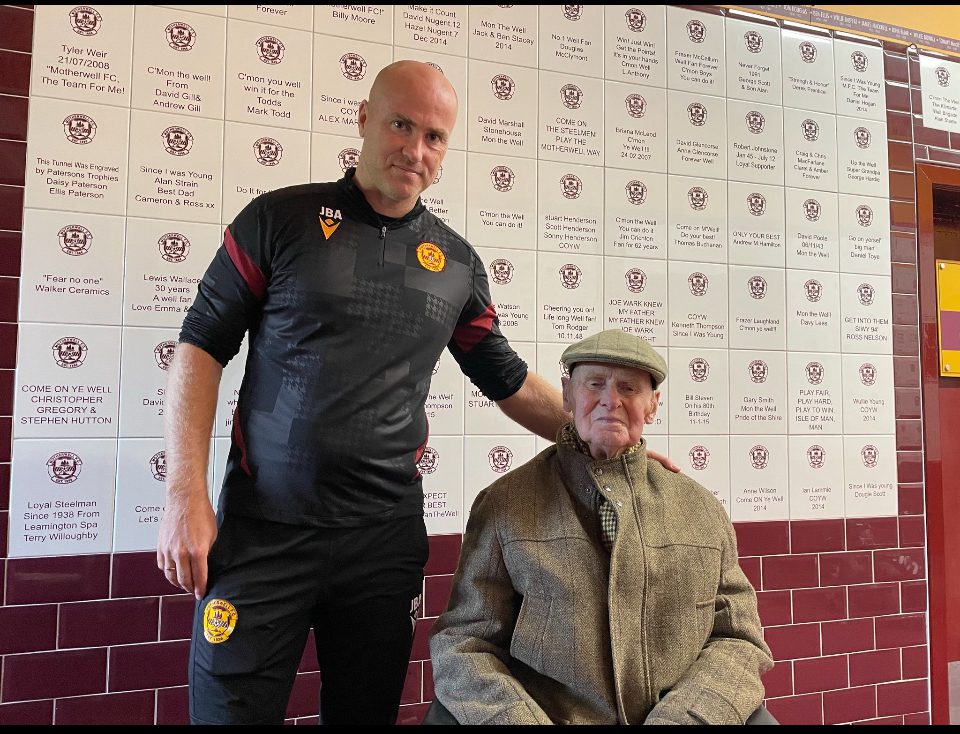
John Chapman with Jens Berthel Askou in the Players' Tunnel at Fir Park, 13 October 2025 (image:MFCHT Collection)

As excitement builds ahead of Motherwell’s League Cup semi-final against St Mirren on 1st November, supporters of all generations are inevitably casting their minds back to that unforgettable day in May 1991 – when the Steelmen lifted the Scottish Cup after a 4–3 classic against Dundee United.

Among those there on the day is John Chapman, the club’s Chairman at the time – and still serving today, at the remarkable age of 93, as Honorary President of Motherwell Football Club. Visiting Fir Park, Mr Chapman was welcomed by club historian Stuart Graham and met with manager Jens Berthel Askou. 

A Boardroom Appointment That Changed Everything

John Chapman first joined the Motherwell board around Christmas 1981 and was appointed Chairman for the start of the 1987-88 season. At that time, the club’s financial position was precarious. Writing years later in a February 1990 match programme, he revealed that when he took office, Motherwell’s overdraft exceeded £500,000. But by the end of the decade the debt had been cleared, “thanks chiefly,” he noted, “to the astute managership of Tommy McLean.”

This prudent approach to stewardship became the hallmark of his leadership. Under John Chapman, Motherwell found the balance between ambition and stability that would carry the club into one of its proudest eras.

Modernising Fir Park

Following publication of the Taylor Report, John Chapman was quick to plan improvements to Fir Park. He detailed proposals to cover and seat the Knowetop Avenue terracing and later announced plans to convert the East Enclosure into an all-seater stand with new facilities. His long-term vision was a compact 14,000-capacity stadium, safe and comfortable for all supporters – years ahead of its time in Scottish football.
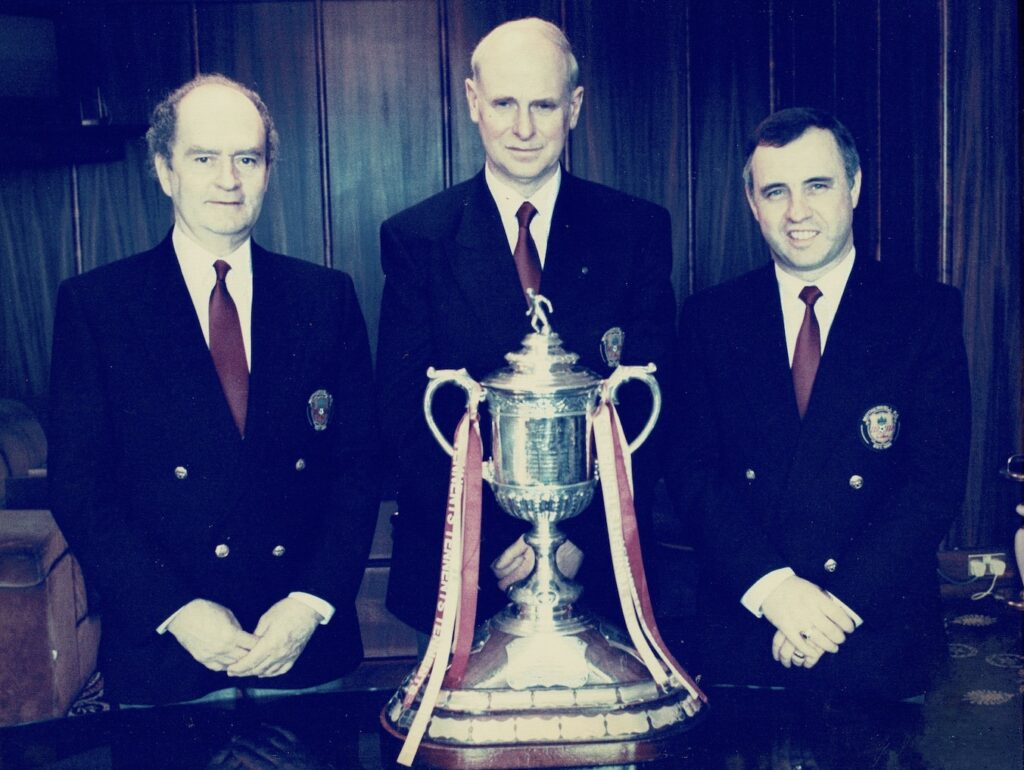
William Dickie (director), John Chapman (Chairman), Tommy McLean (Manager) with Scottish Cup, May 1991 (image: MFCHT Collection)

Cup Glory and Humble Celebration

In May 1991, John Chapman presided over the club’s greatest triumph since the early 1950’s: Motherwell’s Scottish Cup victory at Hampden. After celebrating briefly at Fir Park with jubilant fans, the Chairman quietly walked home to Wishaw to enjoy a cup of tea with his wife – a modest conclusion to a day of glory that perfectly summed up his character.

A Decade of Steady Leadership

Mr Chapman led the club through ten years as Chairman, stepping down in October 1997 after 16 years on the board. In his farewell programme notes, he expressed deep pride in bringing stability and sound business systems to Fir Park, ensuring that full-time football remained sustainable for a club of Motherwell’s size.

“There was no disagreement,” he wrote of his decision to stand down, “it was simply the right time for younger people to take over.”

He was subsequently appointed Honorary Life President, a position he continues to hold with distinction.

Recognition Beyond Fir Park

In the 1992 New Year Honours, John Chapman was awarded the O.B.E. for services to the Scottish Meat Trade – recognition of his achievements beyond football. Yet his heart has always remained at Fir Park.

A Continuing Connection

At 93, John Chapman remains a topic of affection among the Motherwell family. His recent return to Fir Park this October, ahead of another Hampden semi-final, reminds all of a period defined by stability, ambition and integrity – values that underpin the club to this day.

As Motherwell prepares once more for a big cup occasion, it’s fitting to remember the quiet leadership of the man who guided the club to its last major honour – and who continues, even now, to embody the spirit of “Steelmen through and through.”
From Hunter to Wimmer: Managerial Life at Motherwell Got Shorter

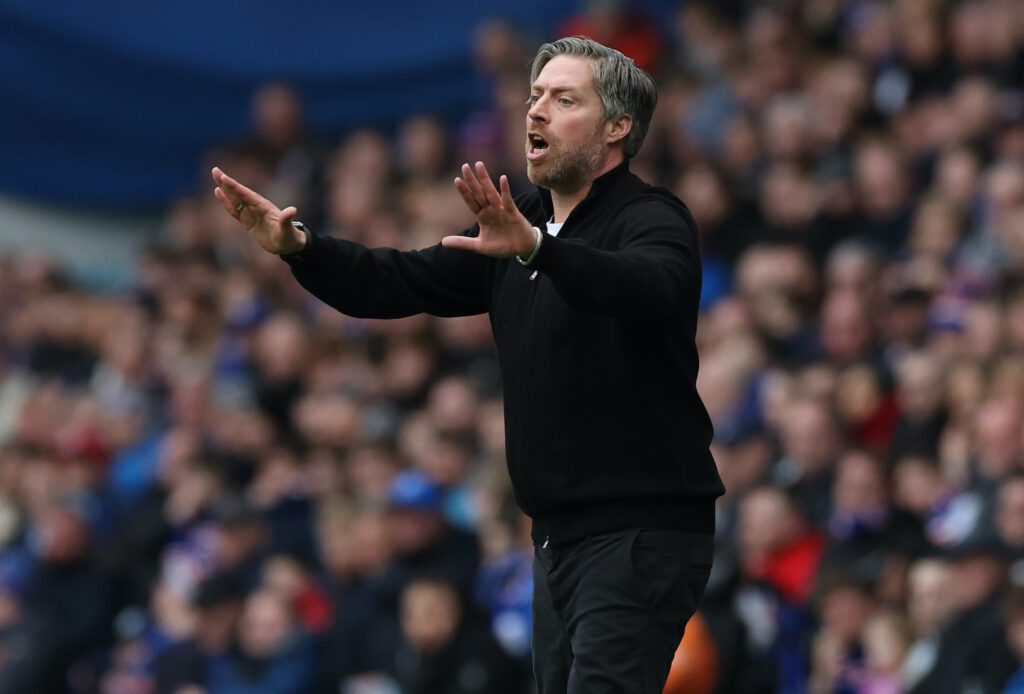
Motherwell FC Manager Michael Wimmer on the touchline, Rangers v MFC at Ibrox, 1 March 2025 (Image: Ian MacNicol/Getty Images)

Michael Wimmer’s departure after just three months in charge of Motherwell FC has etched his name into the record books – albeit not in the way anyone might have hoped. His reign is now the shortest of any manager in the club’s 139-year history. And while his spell was brief, it wasn’t without admiration. Wimmer quickly earned respect for his professionalism, and clear affection for the club.

But this was never about footballing failure. It was about family.

Living in Bavaria with his wife and young children, Wimmer found the practicalities of balancing the needs of his family with managing in Scotland deeply challenging – particularly with no direct flights between Scotland and his home region.

He’s spoken openly about the realities of modern football, how managers come and go with little stability, rarely lasting more than a season or two. And for that reason, he had previously made the decision not to uproot his family for a role that, in today’s game, could be over before it’s truly begun. Ultimately, it proved too difficult – and he made the decision that any parent would: family comes first.

Wimmer’s story is a snapshot of how football, and the role of the manager, has changed.

Go back a century and things looked very different.

John “Sailor” Hunter (image above) was in charge for 35 years, from 1911 to 1946. His tenure brought the club its greatest prize: the 1931–32 league title – and a legacy that still echoes through Fir Park.

He was followed by legendary player and title winner George Stevenson, who guided Motherwell to a Scottish Cup Final in 1951, returning a year later to lift the trophy. George’s team also won the Scottish League Cup in 1950, runners-up in 1954.

Then came Bobby Ancell, creator of the “Ancell Babes”, a side remembered more for their style than silverware, but revered nonetheless. Between these three, Motherwell had just three managers in 54 years.

Contrast that with the modern era: 15 managers in the last 25 years. The shift is undeniable.

That doesn’t mean achievement has vanished, far from it. Tommy McLean’s decade-long spell delivered the 1991 Scottish Cup, a moment frozen in time for a generation of fans. Stuart McCall brought consistency and even Champions League qualifiers. Stephen Robinson took us to two cup finals and back to Europe.

Others, like Terry Butcher and Craig Brown, rebuilt, inspired, and guided the club through crucial phases. But the pattern is clear: long-term stewardship is becoming a thing of the past.

And, unlike George Stevenson, those who have worn the claret and amber with distinction haven’t always found the same success in the dugout.

Bobby Watson, a highly respected defender in the 1970s and early ’80s with over 250 appearances for the club, was handed the reins in 1983. Despite his deep understanding of the club and a heartfelt connection to Fir Park, his time in charge lasted just six months.

Likewise, Stevie Hammell, a modern-day club legend with over 500 appearances to his name, stepped into management in 2022 during a time of transition. Loved by the support and steeped in Motherwell values, his spell was short and ultimately didn’t deliver the turnaround hoped for. Both cases are a reminder that great players don’t always translate into long-term managerial success – even when their hearts are fully in it.

Michael Wimmer’s exit, though disappointing, was no scandal. It was a personal choice rooted in real life. And in many ways, it shines a light on the pressures managers now face, on and off the pitch.

As the club turns to its 30th manager, the question lingers: will we ever see another Hunter, another McLean, someone who stays long enough to build something lasting?

Our Club Historian, Stuart Graham, has now seen 27 of those 29 managers lead Motherwell from the touchline – and asks not just who’s next, but who left a mark?

Ask yourself, how many have you seen? And who stands out in your time? Let’s us know via the contact form.

Motherwell FC’s 29 Managers, April 1911 – May 2025

1 John Hunter (April 1911-May 1946)

2 George Stevenson (June 1946- July 1955)

3 Bobby Ancell (July 1955-late March 1965)

4 Bobby Howitt (March 1965-March 1973)

5 Ian St John (June 1973-September 1974)

6 Willie McLean (September 1974-November 1977)

7 Roger Hynd (December 1977-November 1978)

8 Ally McLeod (December 1978-August 1981)

9 Davie Hay (August 1981-May 1982)

10 Jock Wallace (June 1982-November 1983)

11 Bobby Watson (November 1983-May 1984)

12 Tommy McLean (June 1984-June 1994)

13 Alex McLeish (July 1994-February 1998)

14 Harri Kampman (February 1998-October 1998)

15 Billy Davies (October 1998-September 2001)

16 Eric Black (October 2001-April 2002)

17 Terry Butcher (April 2002-May 2006)

18 Maurice Malpas (May 2006-June 2007)

19 Mark McGhee (June 2007-June 2009)

20 Jim Gannon (June 2009-December 2009)

21 Craig Brown (December 2009- 10 December 2010)

22 Stuart McCall (December 2010-November 2014)

23 Ian Barraclough (December 2014-September 2015)

24 Mark McGhee (October 2015-February 2017)

25 Stephen Robinson (March 2017- 30 December 2020)

26 Graham Alexander (7 January 2021-July 2022)

27 Steven Hammell (11 August 2022 – 11 February 2023)

28 Stuart Kettlewell (22 February 2023 – 27 January 2025)

29 Michael Wimmer (17 February 2025 – 23 May 2025)

Remembering Davie Cooper – 30 Years On

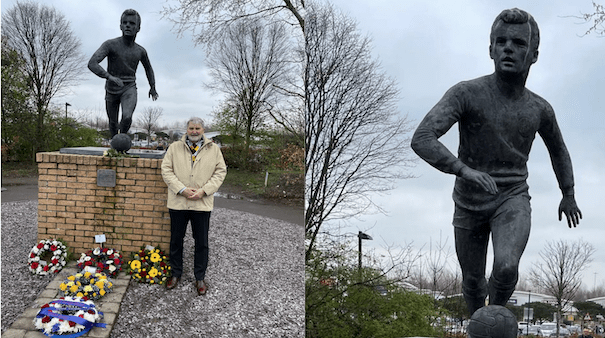
Club Historian, Stuart Graham, attends the 30th anniversary remembrance - at Hamilton Palace Sports Ground - of Davie Cooper's passing (image: MFCHT)

On Sunday, 23rd March 2025, football fans gathered at Davie Cooper’s statue, Hamilton Palace Sports Ground, to mark the 30th anniversary of the passing of one of Scotland’s greatest footballing talents. In a heartfelt tribute, Motherwell, Glasgow Rangers, Clydebank, and the Scottish Football Association came together to honour Davie’s enduring legacy.

The remembrance brought together fans, former teammates, and club representatives, each paying their respects to a man whose impact on Scottish football will never be forgotten. Among those present was Stuart Graham, Motherwell FC Club Historian and Trustee of Motherwell Football Club Heritage Trust, who laid a wreath at the statue.

Reflecting on the occasion, Stuart Graham said, “Davie Cooper was more than a footballer; he was an artist on the pitch. His elegance, vision, and skill captivated supporters across Scotland. Today, we remember not just the player, but the man who brought so much joy to the game. His legacy is etched in our hearts and in the history of Scottish football.”

Davie Cooper’s name remains synonymous with passion, skill, and dedication. From his early days at Clydebank, to the glory years at Rangers, and his unforgettable impact at Motherwell, his influence on Scottish football remains unmatched. Thirty years may have passed, but his memory continues to inspire fans and players alike.

It is hard to believe that 30 years have passed since Davie Cooper left this world. For those who had the privilege of watching him in claret and amber, the memories are as vivid as ever. The sway of his hips, the elegance of his touch, and the magic he could conjure from a football. Cooper was the kind of player who made you believe in the beauty of the game.

He came to Fir Park with the glint of greatness already in his eyes, but gave the Club so much more than fans could have imagined.

That Scottish Cup win in 1991 – calm and composed, a leader without the armband. His experience lifted the team. On that day at Hampden, it is impossible not to think of him.

But beyond the goals and the moments of brilliance, Davie Cooper was a man of humility. The stories passed down over pints at the pub tell of his generosity, his humour and his unwavering love for the game. Young players who grew up idolising him speak of the time he’d stay after training, showing them how to strike a ball just right. His lessons weren’t just about football; they were about pride, patience, and passion.

Motherwell is lucky to call him one of our own. Scottish football, even luckier. His name, his legacy, and that left foot of his are etched forever in our history.

Rest easy, legend. Forever claret and amber.

Two Families, One Club: The Shared Legacy of Motherwell FC

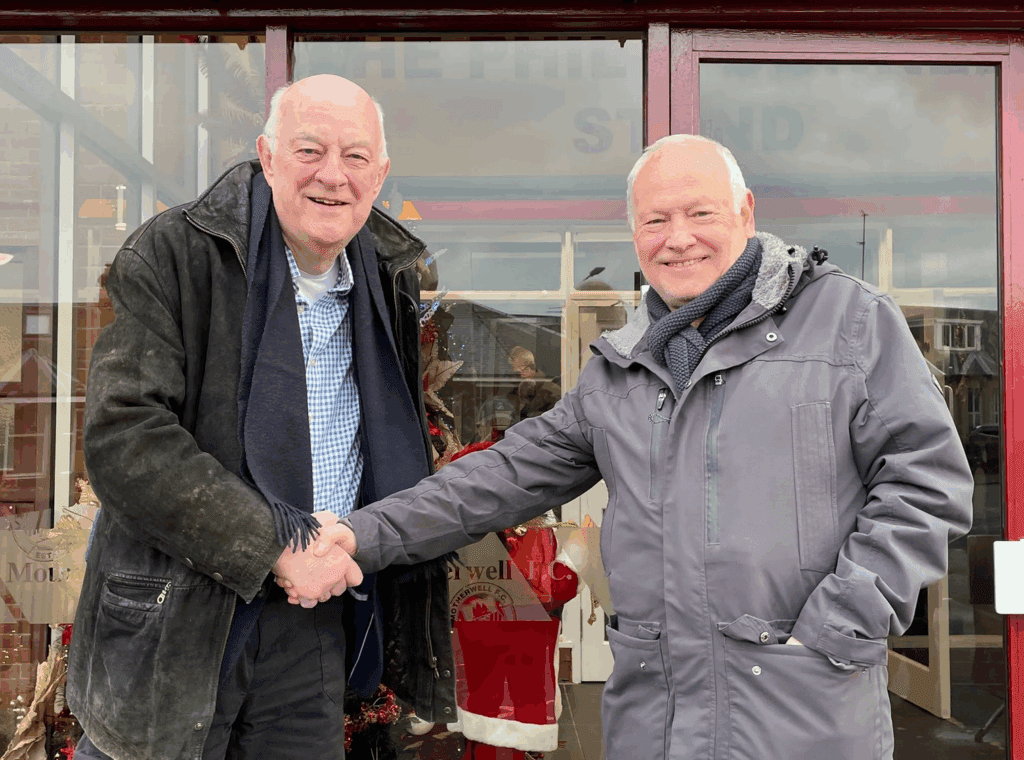
Norman Quirk – great-grandson of Motherwell FC’s first chairman – meets Hugh Ferguson – grandson and namesake of the club’s legendary striker – at Fir Park, 30th November 2024 (image: MFC HT)

At Fir Park last Saturday, history came alive in a heartwarming meeting between two descendants of early Motherwell FC legends. 

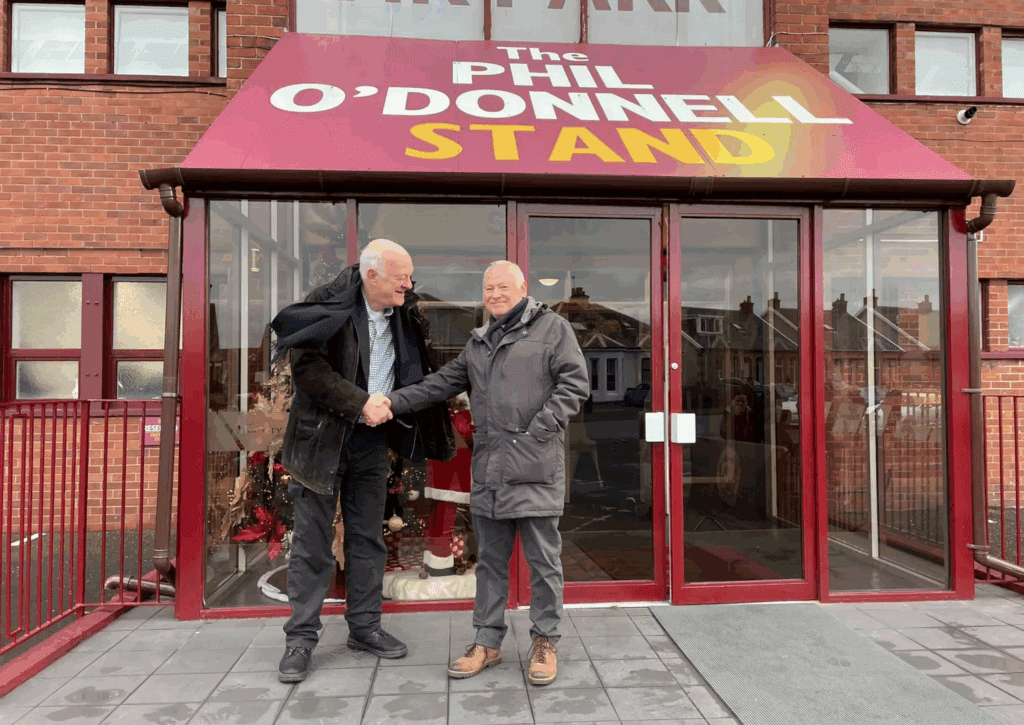
Norman Quirk, the great-grandson of Sergeant Major Thomas J. Quirk, and Hugh Ferguson, the grandson of the club’s legendary striker Hugh Ferguson, shook hands and reminisced on their families’ remarkable contributions to the club. 

Sergeant Major Thomas J. Quirk: A Founding Father of Modern Motherwell  

Sergeant Major Thomas J. Quirk, born in 1852 in Hull, might not have been a natural football man—his first loves were cricket and rugby. 

But as a soldier-turned-publican, Quirk’s leadership and organisational skills soon found a home in Motherwell FC. 

By 1902, he had become Vice-President, and in 1905, as the club transitioned to a Limited Company, he joined the board as a director. 

His influence grew, and by 1910 he was Chairman, leading the club until 1914.

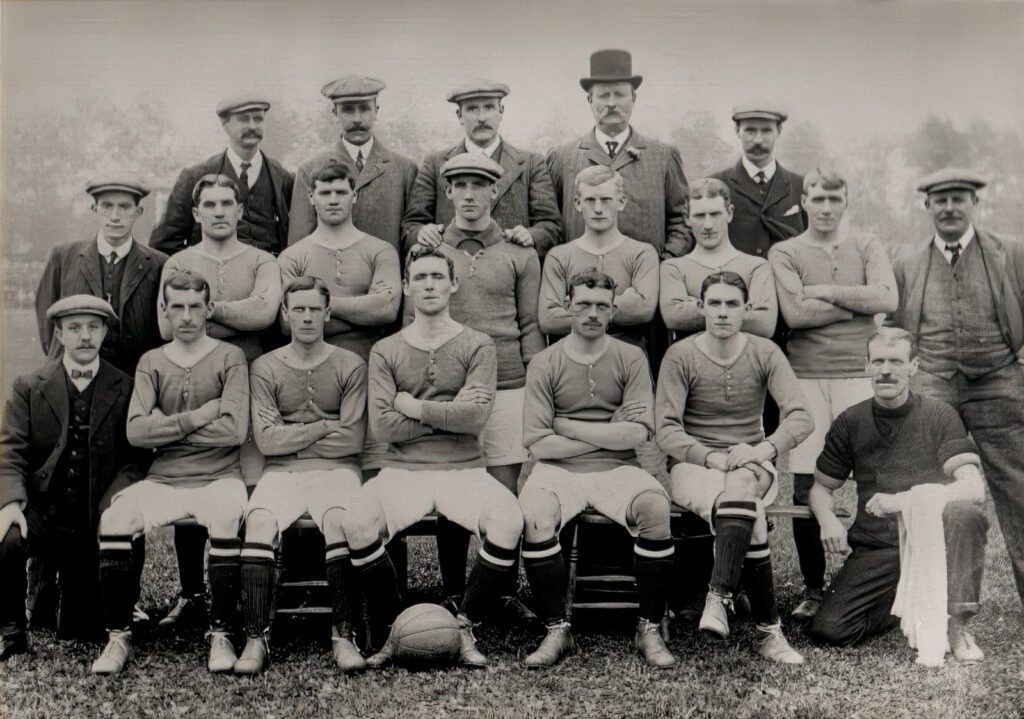
Quirk’s tenure laid the groundwork for Motherwell’s growth. His military discipline and vision helped steer the club through its formative years, including a significant change in 1913 when he presided over discussions about altering the club’s colours from blue to the iconic claret and amber. 

1909-1910 Motherwell FC Squad (Thomas Quirk in back row with top hat)

Quirk’s influence extended beyond Fir Park, serving as Vice-President of the Scottish League. He passed away in 1917, leaving a legacy of stability and progress.  

For Norman Quirk reconnecting with the club offers a poignant reminder of his grandfather’s role in shaping its early identity. “He was more than a Chairman; he was a pioneer,” Norman said. “I’m very proud of my great grandfather and delighted that my son Derek is as enthusiastic about following in his great, great grandfathers’ steps as I am and continuing the Quirk legacy at Motherwell Football Club”.

A frequent visitor to Fir Park ensures that the Quirk family’s connection to Motherwell remains as strong as ever.

Hugh Ferguson: The Steel Town’s Goal-Scoring Machine  

Few names resonate in Fir Park’s history like Hugh Ferguson’s. Born and bred in Motherwell, Ferguson joined the club in 1916, kicking off an extraordinary career that would cement him as one of the finest goal-scorers in Scottish football history. 

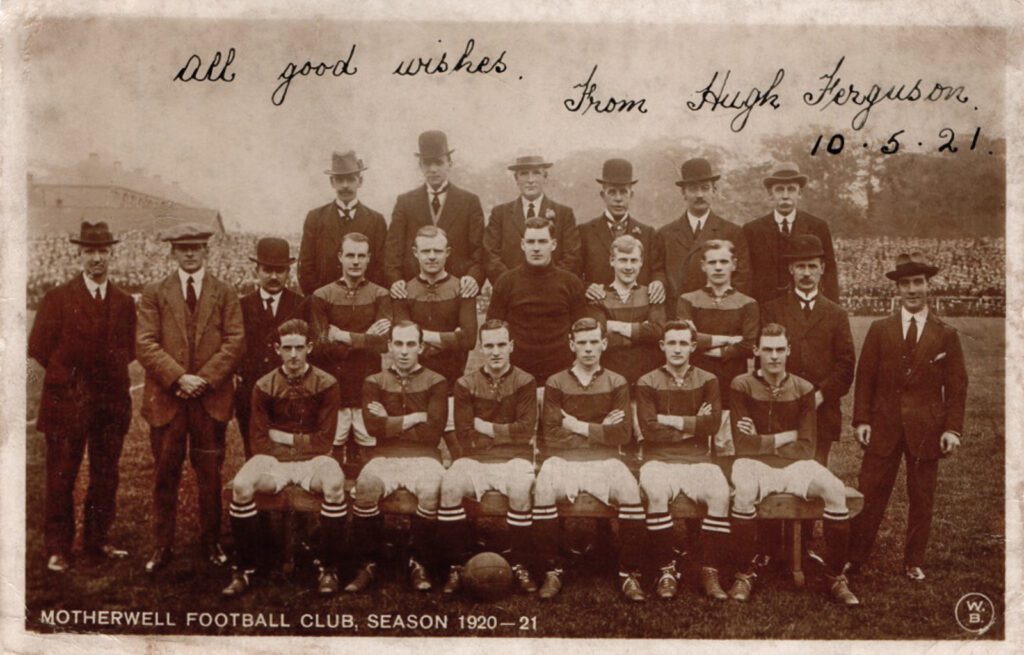
Motherwell FC Squad 1920-21 signed by Hugh Ferguson, front row with ball (image: Club Historian's Personal Collection)

His debut season saw him score an impressive 25 goals, and he only got better from there on. 

Over a decade, he netted an astonishing 284 goals in 346 appearances, including a 43-goal haul in the 1920-21 season—an era-defining achievement.  He was the Erling Haaland of his time. 

Ferguson’s playing style was a blend of power, precision, and tactical intelligence. He wasn’t the fastest or the most flamboyant, but he knew how to score and lead the line. 

His exploits didn’t go unnoticed beyond Scotland; Manchester City and other English clubs came calling, but Ferguson remained loyal to his hometown club until 1925, when he moved to Cardiff City. 

He continued his prolific form, famously scoring the winning goal in the 1927 FA Cup Final, making Cardiff the only team outside England to lift the trophy.  

Hugh Ferguson’s grandson, also named Hugh, proudly reflected on his family’s connection to the club. “My grandfather wasn’t just a great player; he was a gentleman. His record and legacy speak for themselves,” he said. 

The Ferguson family remains deeply involved with Motherwell, Honouring their ancestor’s place in the club’s lore.


Norman Quirk and Hugh Ferguson shake hands at Fir Park, 30th November 2024 (image: MFC HT)

A Shared Legacy  

The meeting between Norman Quirk and Hugh Ferguson at Fir Park was more than just a handshake; it was a bridge between two eras of Motherwell’s rich history. 

The Quirk and Ferguson families continue to honour their ancestors’ contributions, ensuring their legacies endure in the hearts of Motherwell fans.  

For the club, these personal connections are a powerful reminder of its deep roots in the community. As the modern team battles on the pitch, the stories of figures like Quirk and Ferguson inspire players and fans alike, reminding them that they stand on the shoulders of giants.

Motherwell’s history is not just a collection of records and trophies but a living, breathing narrative passed down through generations. And thanks to families like the Quirks and Fergusons, that story continues to thrive.

Echoes of Cup Drama

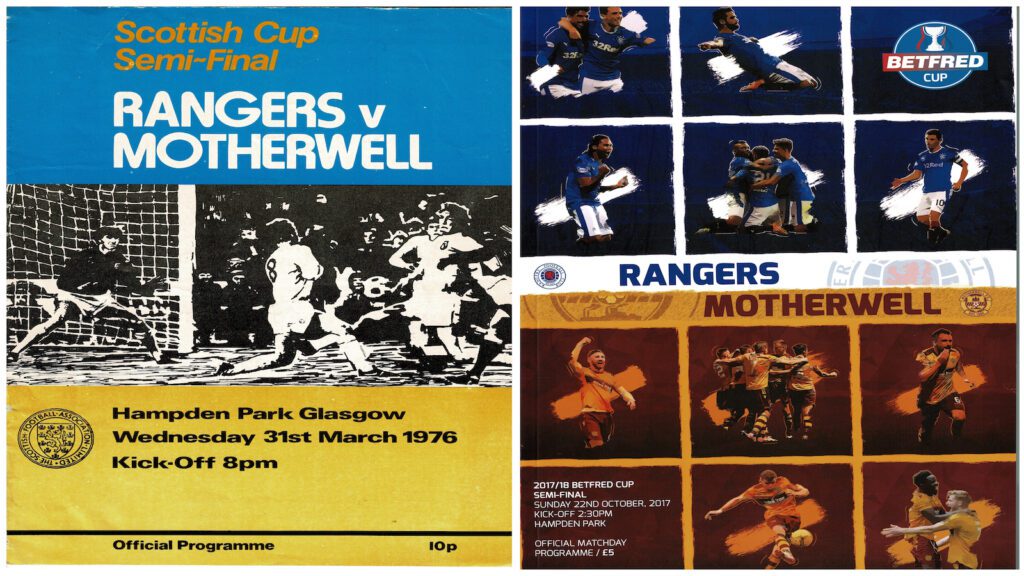
Match programme front covers from 2 semi finals versus Rangers: 31 March 1976 & 22 October 2017

As Motherwell FC prepare for their November 3rd Scottish League Cup semi-final clash against Rangers at Hampden Park, memories of past dramatic encounters between the two sides resurface.

These historic battles have delivered heartbreak, controversy, and unforgettable victories, etching them into the folklore of Motherwell supporters.

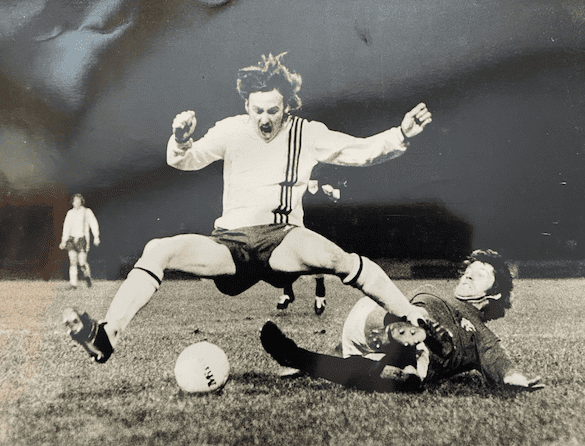
One of the most unforgettable semi-final clashes took place in 1976 in the Scottish Cup. In that game, Motherwell stunned the Rangers crowd by taking a 2-0 lead at Hampden, thanks to quick goals from Stewart McLaren and Willie Pettigrew.

The team seemed on course for a monumental victory until a series of critical decisions by referee JRP Gordon who disallowed a third goal for Motherwell and awarded Rangers a controversial penalty, ultimately leading to a 3-2 comeback win for Rangers.

Willie Pettigrew on the attack:Scottish Cup semi final 31 March 1976 (image donated by Willie Pettigrew)

“To this day, the memory of that match lingers among older Motherwell fans, who witnessed a closely contested game with pivotal moments that ultimately shaped the outcome,” says Stuart Graham, Club Historian and Trustee of Motherwell Football Club Heritage Trust. “Many remember it as a thrilling but bittersweet experience, as what might have been a crowning achievement narrowly slipped away.”

However, not every encounter has ended in frustration. In 2017, Motherwell fans enjoyed one of their most cherished semi-final triumphs in the Scottish League Cup.

This time, it was Louis Moult’s moment to shine. Moult’s clinical first goal set the tone, and his second—a perfectly executed lob from 22 yards—secured a thrilling 2-0 victory.

His performance sent the Claret and Amber fans into raptures, establishing his place as a hero in Motherwell’s recent history and delivering a Hampden moment to remember.

The rivalry with Rangers has also spilled into league fixtures, with notable upsets. In the 1996-97 season, Motherwell stunned Rangers fans at Ibrox by delaying their league title celebrations.

Led by Owen Coyle’s two goals, Motherwell pulled off an unexpected 2-0 victory. Even Rangers manager Walter Smith acknowledged that Motherwell “deserved to win,” as they kept the Glasgow side from sealing a record-equalling ninth consecutive league title.

With Hampden once again serving as the stage, Motherwell fans hope for another iconic result against their storied rivals. As they gather to cheer their team, the memory of those past clashes will only intensify the passion and belief.