140 Years - Anniversary Gala Dinner

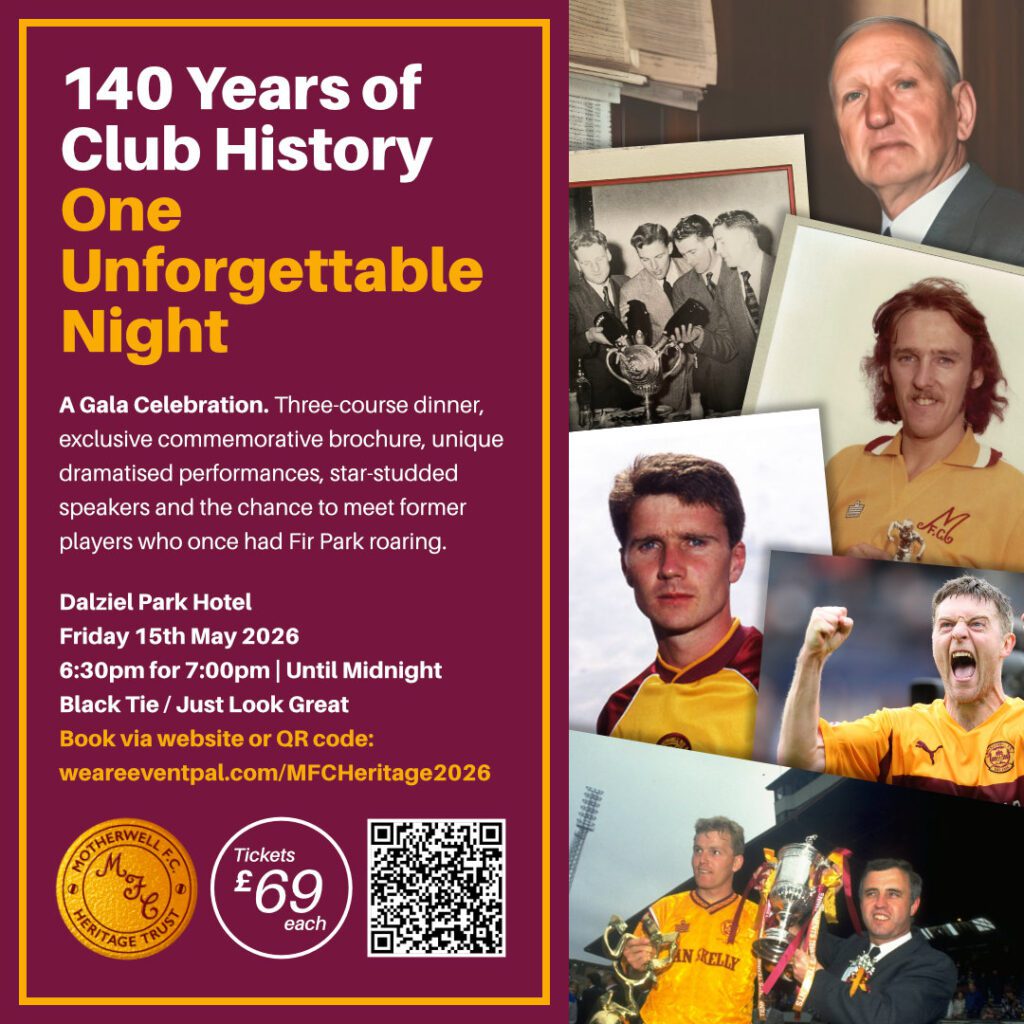
The Motherwell FC 140th Anniversary Dinner, taking place on Friday 15 May 2026, will bring together some of the club’s most celebrated figures from across the decades, including legendary goalscorer Willie Pettigrew, Scottish Cup Final winning goalscorer Stevie Kirk, captain and Hall of Fame defender Stephen Craigan, and one of Scotland’s leading after-dinner speakers, a former Steelman, John Gahaghan.

Hosted by Motherwell Football Club Heritage Trust and Former Players, tickets for this fantastic celebration are now on sale, inviting supporters to join an unforgettable evening honouring the people, moments, and memories that have shaped the club’s remarkable history – while also marking an important new step in preserving that legacy for the future.

For full details plus booking your place, head to https://weareeventpal.com/MFCHeritage2026

Places are limited – early booking is highly recommended.

Tickets: £69

Looking forward to seeing you there.

New Strategic Cooperation

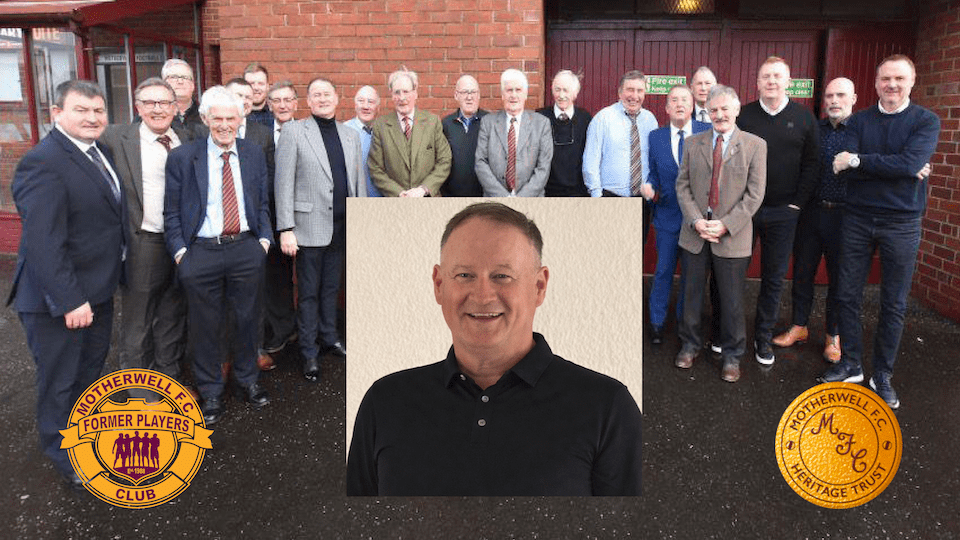
Derek Williams joins the Board of MFC Heritage Trust, proposed by MFC Former Players Club (image: MFCHT)

Motherwell Football Club Heritage Trust is delighted to announce a new strategic cooperation with the Motherwell FC Former Players Club – a natural and exciting alliance that brings together the custodians of the club’s history with the players who created it on the pitch.

The collaboration marks an important step forward in the Trust’s mission to preserve, communicate, and make accessible the club’s rich heritage. By working hand-in-hand with the former players who shaped so many memorable moments in claret and amber, the Trust aims to develop even more engaging heritage experiences for supporters, visitors, and the wider community.

Together, the two organisations will explore new projects with the club that celebrate Motherwell’s proud history, strengthen supporter engagement, and ensure the stories behind the achievements live on for future generations. From heritage events and exhibitions to supporter-focused initiatives, the cooperation will help bring the club’s past closer than ever to its fans.

As part of the new alliance, the Former Players Club will be represented on the Heritage Trust’s Board of Trustees, ensuring that the voices and experiences of those who wore the shirt are embedded in the Trust’s future plans. The Trust welcomes Derek Williams to the Board and look forward to the insight and experience he will bring to the charity.

Derek joined Motherwell FC from Fir Park Boys Club in 1978, progressing through the club ranks at the turn of the 1980s before moving on to Darvel in 1982. He is currently  active with the Former Players’ Club committee and plays a hands-on role in organising its highly regarded events, including the annual Former Players Dinner and a range of guest speaker evenings.

“This cooperation represents an ideal fit for both groups,” explains Brian McCafferty, the Heritage Trust’s Chair. “Combining the Trust’s commitment to safeguarding Motherwell FC’s history with the first-hand knowledge and passion of the players who helped create it, we look forward to delivering new heritage and engagement opportunities that supporters can enjoy for many years to come.”

“The Former Players Club is delighted to be working more closely with the Heritage Trust,” says Derek Williams. “The history of Motherwell FC lives not only in photographs and memorabilia, but in the memories and experiences of the players who represented the club, and this cooperation allows us to share those stories in a much stronger and more meaningful way.”

The Motherwell FC Former Players Club performs an important role in maintaining connections between those who wore the claret and amber around the world. Through its fundraising activities, the organisation also supports visits to elderly supporters to help rekindle cherished memories, provides assistance to the families of late former players, and contributes to charitable causes – with this year’s chosen charity being the Stonehouse based Trust Jack Foundation, which supports those suffering with a mental health illness.

Motherwell Football Club Heritage Trust exists to protect and celebrate the history of Motherwell FC by preserving collections of memorabilia, developing heritage displays within the stadium, organising events, and building a growing online virtual museum. With ambitious plans in the pipeline, the Trust aims to take the storytelling of the club’s history to a new level for today’s supporters, football fans around the world, our local community, and future generations.

Together, the Heritage Trust and the Former Players Club look forward to working closely to celebrate the club’s proud past while creating new opportunities for supporters to connect with the people, moments, and stories that define Motherwell Football Club.

Remembering Davie Cooper – 30 Years On

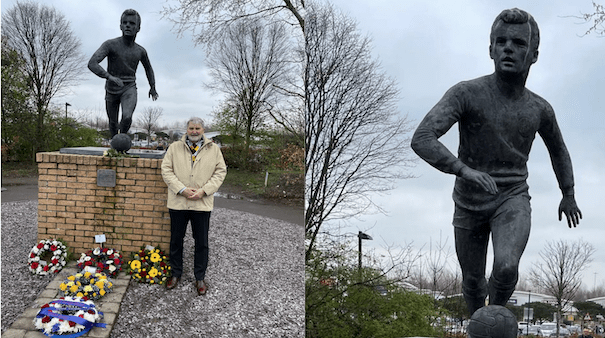
Club Historian, Stuart Graham, attends the 30th anniversary remembrance - at Hamilton Palace Sports Ground - of Davie Cooper's passing (image: MFCHT)

On Sunday, 23rd March 2025, football fans gathered at Davie Cooper’s statue, Hamilton Palace Sports Ground, to mark the 30th anniversary of the passing of one of Scotland’s greatest footballing talents. In a heartfelt tribute, Motherwell, Glasgow Rangers, Clydebank, and the Scottish Football Association came together to honour Davie’s enduring legacy.

The remembrance brought together fans, former teammates, and club representatives, each paying their respects to a man whose impact on Scottish football will never be forgotten. Among those present was Stuart Graham, Motherwell FC Club Historian and Trustee of Motherwell Football Club Heritage Trust, who laid a wreath at the statue.

Reflecting on the occasion, Stuart Graham said, “Davie Cooper was more than a footballer; he was an artist on the pitch. His elegance, vision, and skill captivated supporters across Scotland. Today, we remember not just the player, but the man who brought so much joy to the game. His legacy is etched in our hearts and in the history of Scottish football.”

Davie Cooper’s name remains synonymous with passion, skill, and dedication. From his early days at Clydebank, to the glory years at Rangers, and his unforgettable impact at Motherwell, his influence on Scottish football remains unmatched. Thirty years may have passed, but his memory continues to inspire fans and players alike.

It is hard to believe that 30 years have passed since Davie Cooper left this world. For those who had the privilege of watching him in claret and amber, the memories are as vivid as ever. The sway of his hips, the elegance of his touch, and the magic he could conjure from a football. Cooper was the kind of player who made you believe in the beauty of the game.

He came to Fir Park with the glint of greatness already in his eyes, but gave the Club so much more than fans could have imagined.

That Scottish Cup win in 1991 – calm and composed, a leader without the armband. His experience lifted the team. On that day at Hampden, it is impossible not to think of him.

But beyond the goals and the moments of brilliance, Davie Cooper was a man of humility. The stories passed down over pints at the pub tell of his generosity, his humour and his unwavering love for the game. Young players who grew up idolising him speak of the time he’d stay after training, showing them how to strike a ball just right. His lessons weren’t just about football; they were about pride, patience, and passion.

Motherwell is lucky to call him one of our own. Scottish football, even luckier. His name, his legacy, and that left foot of his are etched forever in our history.

Rest easy, legend. Forever claret and amber.

Cammy Murray – A Life Lived with Purpose and Passion

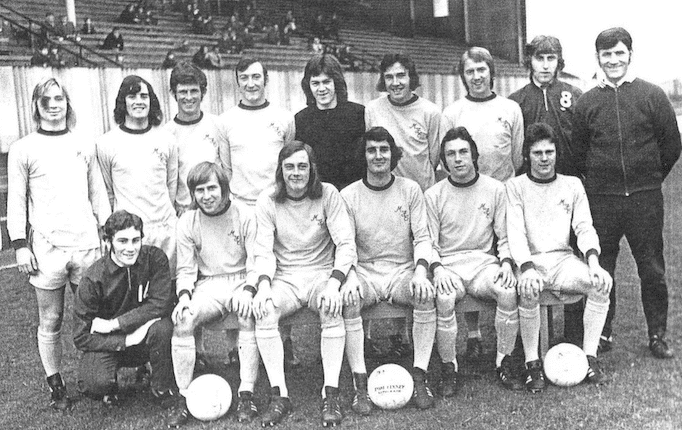
Cammy Murray in claret and amber, back row, 3rd from the left

It is with profound sadness that we reflect on the passing of Robert Cameron “Cammy” Murray, a remarkable man whose life of dedication, humility, and kindness left an indelible mark on Scottish football and beyond.

Cammy’s unwavering passion for the game and his community touched the lives of all who knew him, ensuring his legacy will endure for generations.

From humble beginnings in Drumchapel to becoming a record-setting player at St Mirren and a beloved coach and mentor at Motherwell, Cammy exemplified resilience, integrity, and selflessness in every role he embraced.

“To me, Cammy was an ol’ school gentleman, someone who had a good heart and deeply cared for others regardless of the relationship,” reflected Stuart Graham, Motherwell FC Club Historian and Trustee of the Motherwell Football Club Heritage Trust.

Born on June 20, 1944, in post-war Scotland, Cammy’s footballing journey began when he joined St Mirren from Drumchapel Amateurs in 1962. Over the next decade, he became a pillar of the Buddies’ defence, making 417 competitive appearances—a club record that stood for decades. He displayed remarkable consistency, playing 170 consecutive league games, and was instrumental in securing the Second Division Championship during the 1967/68 season with crucial goals and outstanding leadership.

“Cammy scored for St Mirren in a 1-1 draw at home to Arbroath on April 17, 1968. Just another goal? Certainly not, that was the goal that clinched the 1967/68 Second Division Championship for a St Mirren team managed by Alex Wright,” recalled Stuart Graham.

In 1972, Cammy joined Motherwell, where his passion for football flourished beyond his playing years. As a coach under Tommy McLean, Cammy played a vital role in shaping young talent and guided Motherwell’s reserves to success. His meticulous coaching methods, especially during pre-season training, were challenging but effective, and they reflected his commitment to developing players both technically and mentally.

Stevie Kirk, who scored the winning goal in Motherwell’s 1991 Scottish Cup Final triumph, said, “Cammy played a big part in the training at Motherwell, especially during pre-season when he was on the summer break from his teaching job. He was always introducing new training techniques, which were tricky to master but eventually worked. Cammy was a man I have much respect for – a true gentleman and an inspiration to me and so many others at the club.”

“There was never lies, never deception. never negativity. never bullying. never brainwashing. never shock treatment – and never fear, in any form; the very reasons Cammy Murray was never destined to become a manager,” noted John Gahagan, who made over 290 appearances for Motherwell between 1979-1990.

After leaving the professional game, Cammy became a dedicated physical education teacher at Lanark Grammar School where his influence also reached the classroom, inspiring countless students.  His approach to nurturing talent, whether in sports or academics, was rooted in values of respect, discipline, and encouragement.

Cammy found a happy home at the ‘Grammar’ where, as well as teaching, he became a key figure in the school staff football team, Lanark Rams. Cammy’s passion for football created a great camaraderie in the team.

Such passion for and enjoyment of the game encouraged him to write four books.

The first one entitled, “The Rams’ 40th anniversary 1978-2018”, brings together the memories of Rams past and present to tell the story of a very fondly remembered Lanark Grammar football team.

He published two books that represent scrapbook accounts of Scotland’s football past, but Cammy’s other book looks to Scotland’s football future. Drawing on his own research and a lifetime of playing and coaching experience, “What our football needs is a sense of freedom” laments the loss of flair and individuality in Scottish football and speculates on how we could bring these back to revitalise the national professional game.

Beyond his contributions on the pitch, Cammy was instrumental in establishing the Motherwell Football Club Heritage Trust, ensuring the club’s rich history would be preserved for future generations. His tireless work with the Former Players Club fostered camaraderie and celebrated the achievements of past players, emphasizing the importance of community and connection.

As Willie Pettigrew, Motherwell’s goal-scoring legend, noted, “Cammy was old school. A loyal and helpful friend. His work to help establish the Heritage Trust was done out of a sense of duty, not for reward, just as in his football career.”

Cammy’s footballing journey took him to Arbroath, Dunfermline, Falkirk, and Hearts, where he continued his work as a youth coach under Tommy McLean. In every role, he left a profound impact, earning the admiration and gratitude of players, colleagues, and friends.

Cammy’s legacy is a testament to how one individual can profoundly shape the lives of others. Whether coaching on the touchline, preserving football history, or simply sharing a kind word, Cammy gave selflessly of himself.

As Gahagan put it, “I hold Cammy Murray in my heart as one of THE greatest men to have crossed my path, both in the world of sport and in the real world.”

As we bid farewell to a man who gave so much to the world, we take solace in knowing that Cammy Murray’s life was a masterclass in living with purpose, integrity, and passion.

Thank you, Cammy, for everything.
Two Families, One Club: The Shared Legacy of Motherwell FC

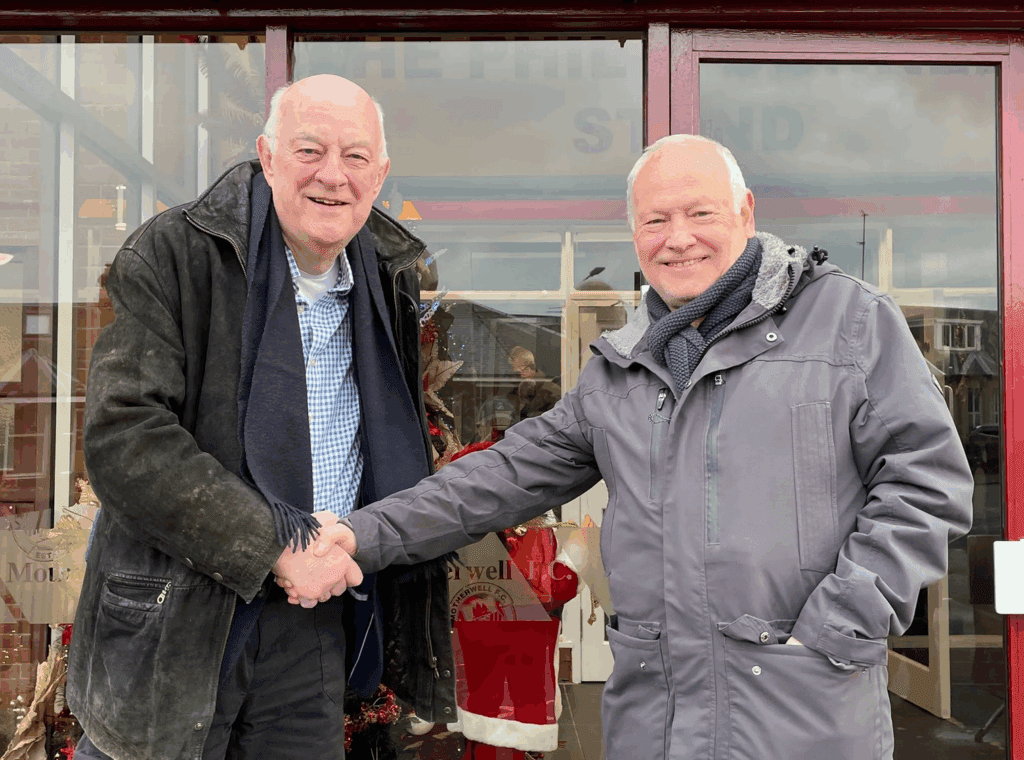
Norman Quirk – great-grandson of Motherwell FC’s first chairman – meets Hugh Ferguson – grandson and namesake of the club’s legendary striker – at Fir Park, 30th November 2024 (image: MFC HT)

At Fir Park last Saturday, history came alive in a heartwarming meeting between two descendants of early Motherwell FC legends. 

Norman Quirk, the great-grandson of Sergeant Major Thomas J. Quirk, and Hugh Ferguson, the grandson of the club’s legendary striker Hugh Ferguson, shook hands and reminisced on their families’ remarkable contributions to the club. 

Sergeant Major Thomas J. Quirk: A Founding Father of Modern Motherwell  

Sergeant Major Thomas J. Quirk, born in 1852 in Hull, might not have been a natural football man—his first loves were cricket and rugby. 

But as a soldier-turned-publican, Quirk’s leadership and organisational skills soon found a home in Motherwell FC. 

By 1902, he had become Vice-President, and in 1905, as the club transitioned to a Limited Company, he joined the board as a director. 

His influence grew, and by 1910 he was Chairman, leading the club until 1914.

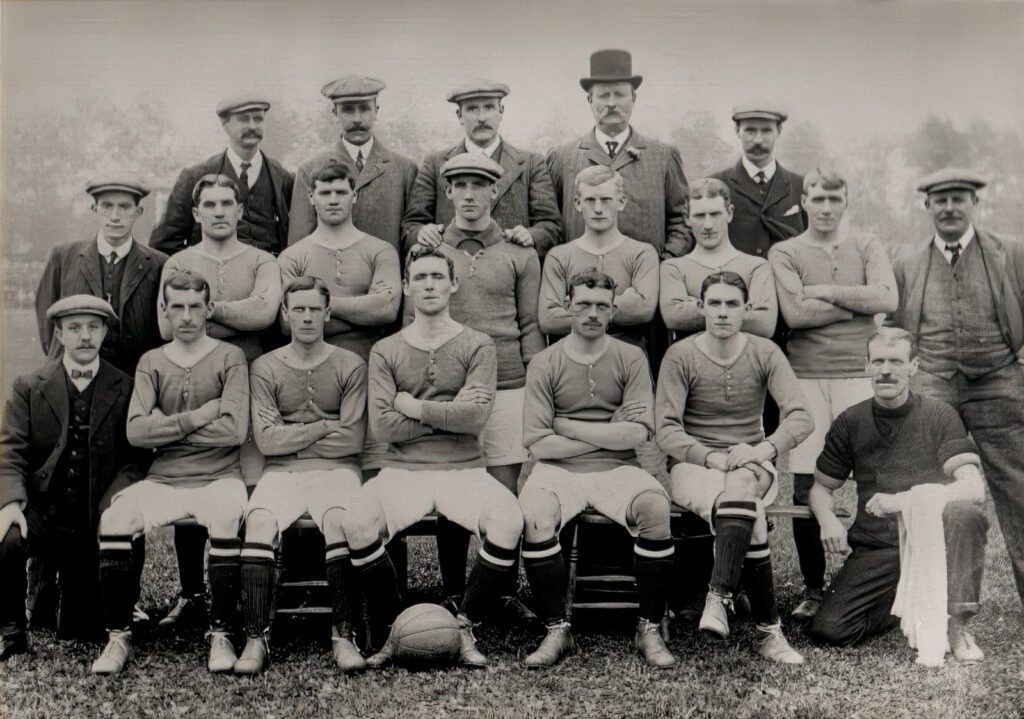
Quirk’s tenure laid the groundwork for Motherwell’s growth. His military discipline and vision helped steer the club through its formative years, including a significant change in 1913 when he presided over discussions about altering the club’s colours from blue to the iconic claret and amber. 

1909-1910 Motherwell FC Squad (Thomas Quirk in back row with top hat)

Quirk’s influence extended beyond Fir Park, serving as Vice-President of the Scottish League. He passed away in 1917, leaving a legacy of stability and progress.  

For Norman Quirk reconnecting with the club offers a poignant reminder of his grandfather’s role in shaping its early identity. “He was more than a Chairman; he was a pioneer,” Norman said. “I’m very proud of my great grandfather and delighted that my son Derek is as enthusiastic about following in his great, great grandfathers’ steps as I am and continuing the Quirk legacy at Motherwell Football Club”.

A frequent visitor to Fir Park ensures that the Quirk family’s connection to Motherwell remains as strong as ever.

Hugh Ferguson: The Steel Town’s Goal-Scoring Machine  

Few names resonate in Fir Park’s history like Hugh Ferguson’s. Born and bred in Motherwell, Ferguson joined the club in 1916, kicking off an extraordinary career that would cement him as one of the finest goal-scorers in Scottish football history. 

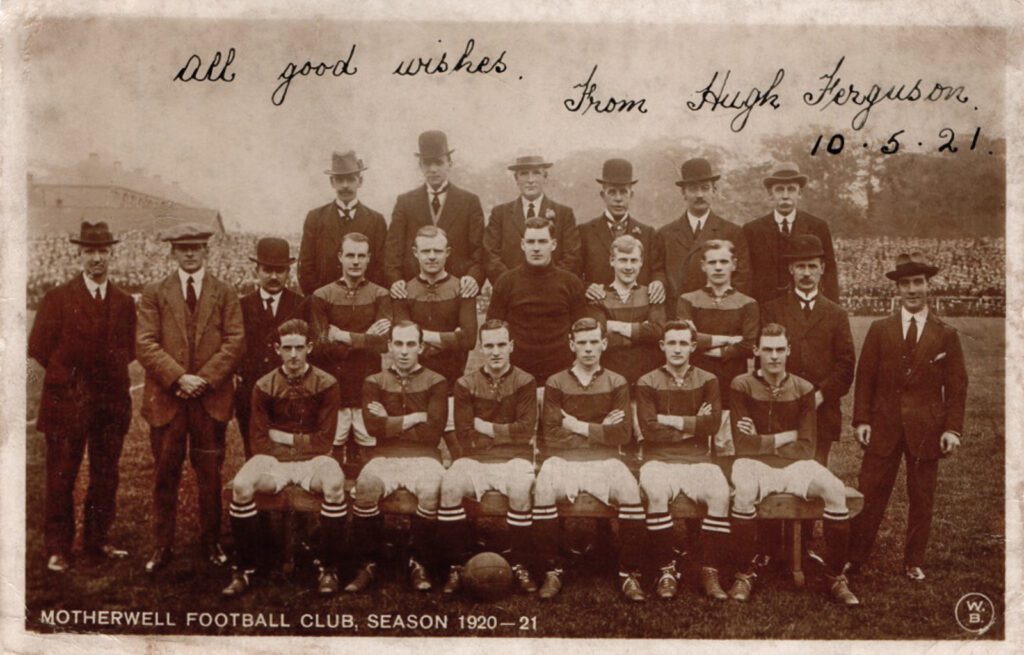
Motherwell FC Squad 1920-21 signed by Hugh Ferguson, front row with ball (image: Club Historian's Personal Collection)

His debut season saw him score an impressive 25 goals, and he only got better from there on. 

Over a decade, he netted an astonishing 284 goals in 346 appearances, including a 43-goal haul in the 1920-21 season—an era-defining achievement.  He was the Erling Haaland of his time. 

Ferguson’s playing style was a blend of power, precision, and tactical intelligence. He wasn’t the fastest or the most flamboyant, but he knew how to score and lead the line. 

His exploits didn’t go unnoticed beyond Scotland; Manchester City and other English clubs came calling, but Ferguson remained loyal to his hometown club until 1925, when he moved to Cardiff City. 

He continued his prolific form, famously scoring the winning goal in the 1927 FA Cup Final, making Cardiff the only team outside England to lift the trophy.  

Hugh Ferguson’s grandson, also named Hugh, proudly reflected on his family’s connection to the club. “My grandfather wasn’t just a great player; he was a gentleman. His record and legacy speak for themselves,” he said. 

The Ferguson family remains deeply involved with Motherwell, Honouring their ancestor’s place in the club’s lore.


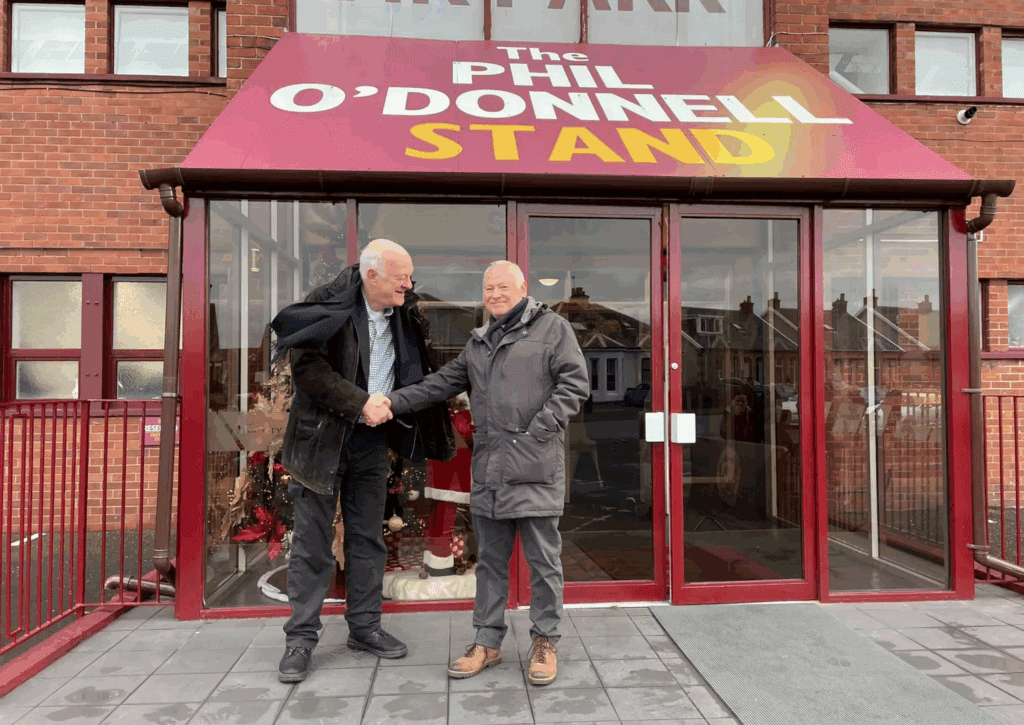
Norman Quirk and Hugh Ferguson shake hands at Fir Park, 30th November 2024 (image: MFC HT)

A Shared Legacy  

The meeting between Norman Quirk and Hugh Ferguson at Fir Park was more than just a handshake; it was a bridge between two eras of Motherwell’s rich history. 

The Quirk and Ferguson families continue to honour their ancestors’ contributions, ensuring their legacies endure in the hearts of Motherwell fans.  

For the club, these personal connections are a powerful reminder of its deep roots in the community. As the modern team battles on the pitch, the stories of figures like Quirk and Ferguson inspire players and fans alike, reminding them that they stand on the shoulders of giants.

Motherwell’s history is not just a collection of records and trophies but a living, breathing narrative passed down through generations. And thanks to families like the Quirks and Fergusons, that story continues to thrive.